

OUD Is a Treatable Brain Disease
Opioid use disorder (OUD) is a relapsing disease that changes how the brain’s reward, stress, and self-control circuits function, which is why it is so hard to quit opioids without assistance. Like other chronic diseases, OUD can be managed successfully with the right treatment, support, and compassion. It is not a lack of willpower or a moral failure; it is a biological condition rooted in measurable changes in the brain.
How Opioids Affect the Brain
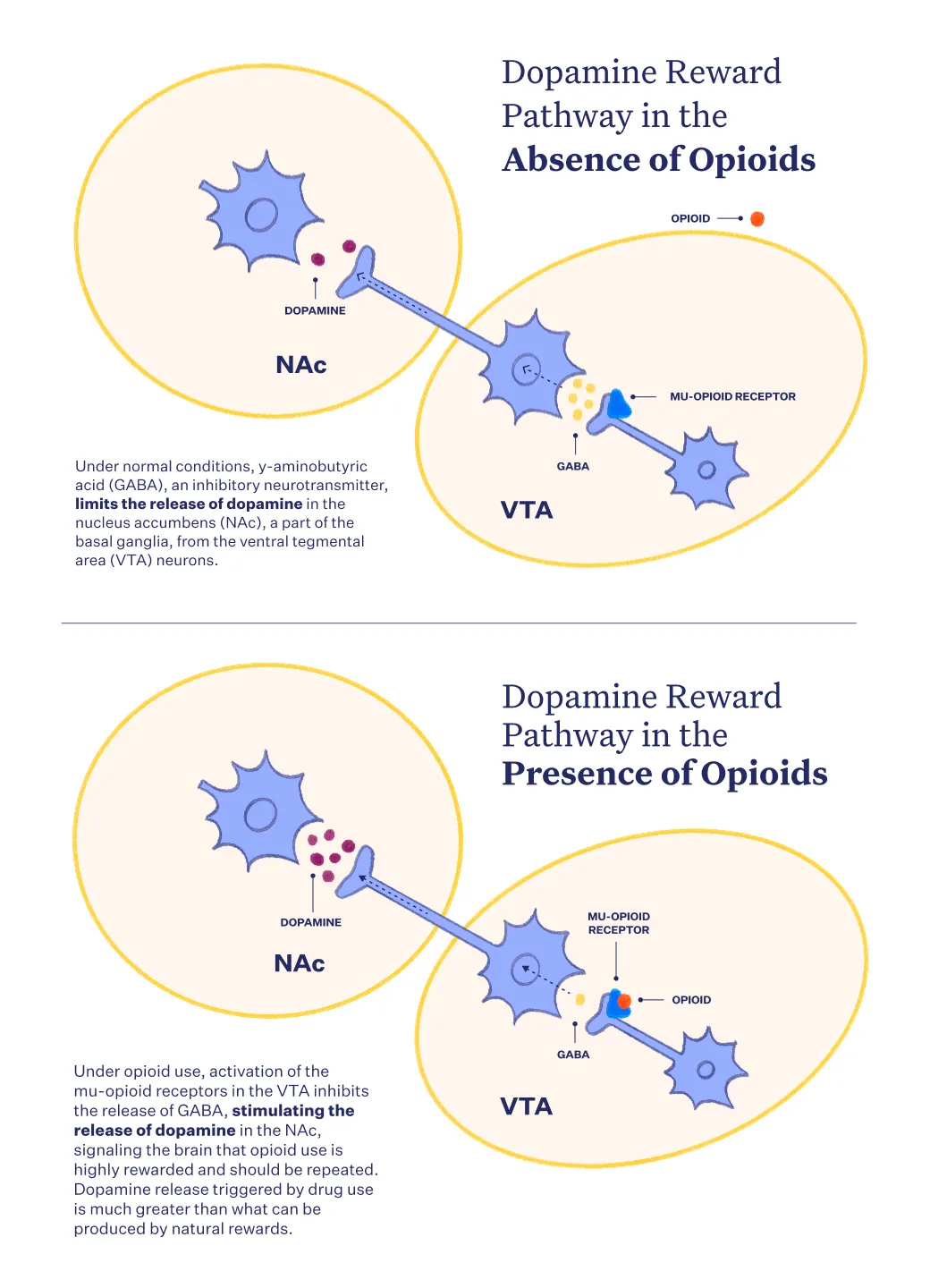
Opioids — including prescription pain relievers, heroin, and synthetic opioids like fentanyl — work by binding to specific receptors in the brain called mu-opioid receptors. They initially trigger feelings of relief and pleasure that are much stronger than what people get with natural rewards, which can lead to repeated use.
With chronic opioid use, the brain adapts:
- Reward circuits recalibrate
The brain becomes less sensitive to natural sources of reward — like food, relationships, or achievements. As a result, people may no longer feel pleasure from non-drug rewards. Over time, they may continue using opioids not to feel “high” but to feel normal.
These changes in the brain also contribute to the physical symptoms of opioid withdrawal, including muscle aches, nausea, diarrhea, and hot and cold flashes. For many people, these symptoms can be intense and distressing, often driving continued opioid use in an effort to relieve the discomfort and avoid withdrawal.
- Self-control networks weaken
Imaging studies show that chronic opioid use disrupts communication between the brain’s prefrontal cortex (PFC) — the region responsible for judgment, impulse control, and decision-making — and the limbic system, which drives emotional and reward-based behavior. As prefrontal control diminishes, emotionally driven impulses dominate, making it harder to resist cravings even when a person wants to stop.
- The brain’s priorities shift
Drug-related cues and cravings become dominant, capturing attention and motivation at the expense of other life goals. The person’s behavior becomes compulsive, driven by altered brain circuitry rather than conscious choice, despite harmful consequences for the person or their loved ones.
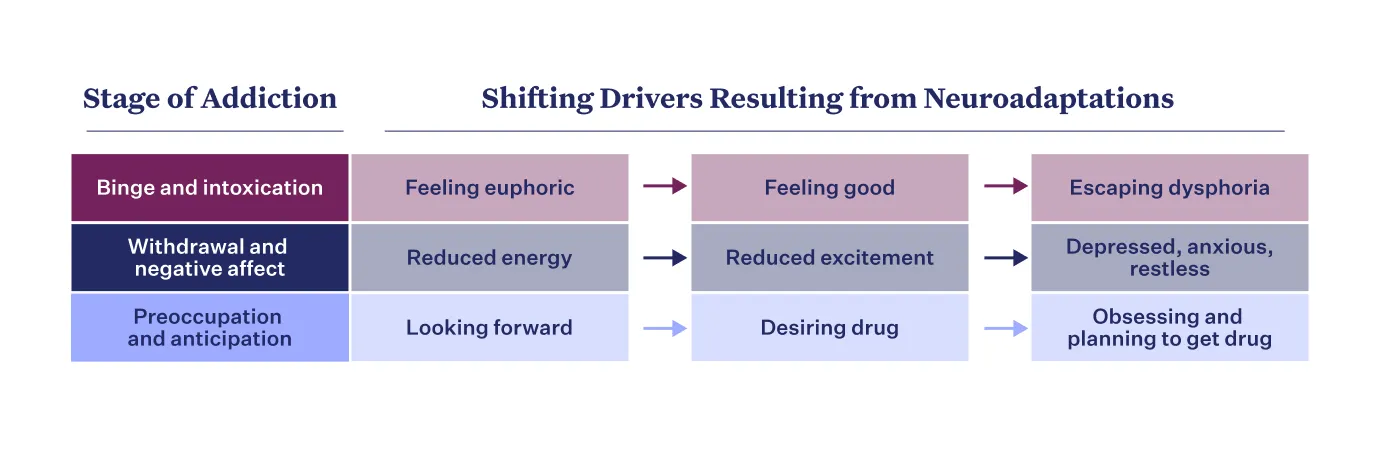
These changes explain why opioid use disorder is a chronic brain disease, not a failure of character or willpower. Recovery involves medical care, behavioral and social support that can help restore the balance between the brain’s reward and control systems.
| Healthy Brain | Brain with OUD |
| Balanced dopamine signaling | Dysregulated reward response to opiods |
| Natural motivation for healthy reward (food, family, purpose) | Reduced response to natural rewards |
| Normal stress regulation | Heightened stress and craving when opids are absent |
| Controlled opiod use | Compulsive opiods use despite negative consequences |
For the brain, the difference between normal rewards and drug rewards can be likened to the difference between someone whispering into your ear and someone shouting into a microphone. Just as we turn down the volume on a radio that is too loud, the brain of someone who misuses drugs adjusts by producing fewer neurotransmitters in the reward circuit, or by reducing the number of receptors that can receive signals. As a result, the person’s ability to experience pleasure from natural rewarding (i.e. reinforcing) activities is also reduced.
Why OUD Is a Disease — Not a Choice
The medical community recognizes OUD as a chronic brain disease because it meets the same biological and behavioral criteria as other chronic illnesses — persistent, relapsing, and characterized by measurable changes in body systems.
Further proof:
- Changes in brain structure and function can be seen on imaging studies1
- Genetic, environmental, and psychological factors all contribute to vulnerability2
- Medical treatment (like buprenorphine) helps restore balance to these same neural pathways3
Understanding these changes and factors help explain why opioid use disorder is a medical condition — not a moral failing — and why treatment and support are essential for recovery.
Addiction is a chronic brain disease, not a moral failing.
1. https://pmc.ncbi.nlm.nih.gov/articles/PMC5244682
2. https://medicine.yale.edu/news-article/study-sheds-light-on-genetic-and-environmental-risk-factors-for-opioid-use-disorder
3. https://library.samhsa.gov/sites/default/files/pep21-02-01-002.pdf
4. https://www.hhs.gov/sites/default/files/facing-addiction-in-america-surgeon-generals-report.pdf
Share